
When temperatures drop, concrete doesn’t behave the same way it does in warmer months — but with the right planning, the right mix, and the right equipment, winter pours can still be safe, successful, and strong.
At GFP Mobile Mix Supply, we supply fresh, on-demand concrete throughout Delaware and the Mid-Atlantic, and winter is one of the seasons where volumetric mixing truly shines. Here’s what you should know about cold-weather concrete and why volumetric trucks are the ideal solution when the forecast gets frosty.
What Is Considered “Cold Weather” for Concrete?
According to ACI (American Concrete Institute), cold weather is defined as: An air temperature below 40°F during placement and for 48 hours afterward.
Below this threshold, concrete is at risk of:
Slower set times
Reduced early strength
Freezing before it reaches initial set
Surface scaling and long-term durability issues
That’s why winter placement requires the right plan — and the right supplier.
Why Volumetric Concrete Performs Better in Cold Weather
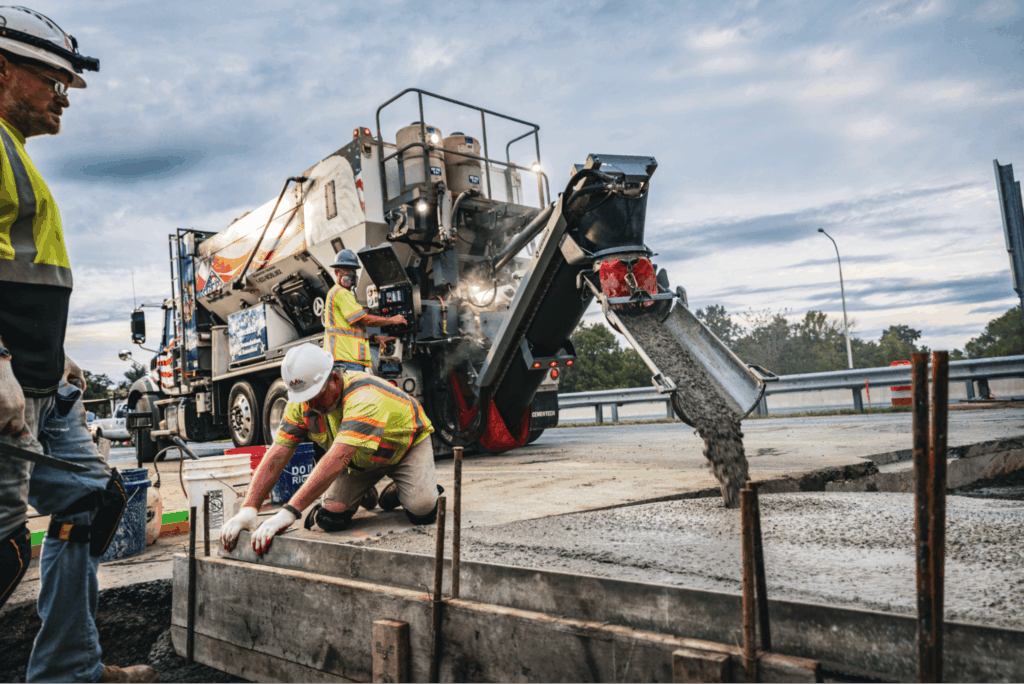
While traditional ready-mix concrete is batched at the plant and transported in a drum, volumetric concrete is mixed fresh on-site, seconds before placement. This difference is critical in cold weather:
1. No Load Time Limits in Winter
Ready-mix trucks are racing the clock — the colder it is, the more unpredictable the set time becomes.
Volumetric trucks eliminate this problem:
Ingredients stay separated until the moment of mixing
No batch becomes too cold or begins to set during transport
No rejected loads due to winter delays or slow placement
Perfect for emergency cold-weather road repairs or utility breaks
This reliability is exactly why GFP Mobile Mix is frequently called during severe conditions.
2. You Control the Mix — In Real Time
Cold weather requires adjustments, including:
Reduced water content
Accelerators
Heated water
Optimized slump
Higher early-strength materials (like specialty rapid-setting or DelDOT-approved mixes)
With volumetric, your operator can make mix changes on the spot — no sending trucks back to the plant for adjustments.
3. Consistent Fresh Concrete = Better Early Strength
Freshly mixed concrete has a higher internal temperature and a more predictable hydration process. Because volumetric trucks mix on-site:
Concrete starts hydrating at the moment you need it, not 30–60 minutes earlier
You achieve better early strength development
There’s far less risk of the mix cooling off or beginning to set inside the truck
This is essential for cold-weather pours where every degree matters.
4. Faster Placement, Less Downtime
Winter daylight is limited — and slow setups can delay entire projects.
Volumetric trucks allow:
Faster mobilization
Faster placement
Continuous pouring with no waiting for additional loads
Minimal traffic disruption for emergency repairs
Best Practices for Placing Concrete in Cold Weather
Regardless of mix type, contractors should keep the following guidelines in mind:
Warm the subgrade if it is frozen or covered in ice
Use insulated blankets or heated enclosures to protect fresh concrete
Place concrete at the warmest time of day
Use accelerators or warm water to promote hydration
Avoid adding extra water to “loosen” the mix — it weakens the slab
Monitor temperatures during the first 24–48 hours
GFP Mobile Mix Supply operators are trained to help adjust your mix and placement strategy to winter conditions.
When Should You Consider Cold Weather Concrete?
Cold-weather considerations are important for:
Driveways, sidewalks, and slabs installed between November–March
Roadway and utility emergency repairs
Commercial slabs with strict schedules
Bridge decks, sidewalks, and curb/gutter work
Industrial projects requiring early strength gain
Anywhere freezing temperatures may occur within 48 hours of placement
If your project cannot wait for a warm spell, volumetric concrete gives you the flexibility and control to pour safely — even in snow.
Why GFP Mobile Mix?
Our fleet of state-of-the-art volumetric mixers allows us to:
Produce fresh concrete on-site
Adjust your mix instantly for weather conditions
Provide DelDOT-approved and PennDOT-approved cold-weather mixes
Deliver exactly the amount you need — no waste
When temperatures drop, GFP Mobile Mix Supply helps keep your project moving.
Need cold-weather concrete? We’re ready when you are.
Call our dispatch at (302) 828-4444 to schedule winter-ready concrete for your next project.